

The Science of Soundproofing: How Jeju Room Salons Create the Perfect Karaoke Environment
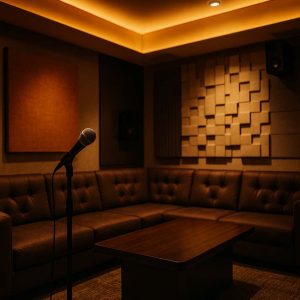 Karaoke rooms may appear simple—just a microphone, some speakers, and a private space—but acoustically, they are among the trickiest environments to design. Singers cover a wide range of frequencies, from deep bass notes to piercing highs. Add in loud music playback, and you have a room filled with competing sound energy. If the space isn’t carefully engineered, echoes, distortion, and listener fatigue quickly set in. Worse, noise can leak into neighboring rooms and hallways, disrupting other guests. That’s why many venues now consult professionals before finalizing their Jeju karaoke reservations (제주가라오케 예약), ensuring the space delivers not just privacy, but acoustic quality worthy of the island’s upscale nightlife.
Jeju Room Salons and the Soundproofing Mission
On Jeju Island, where private karaoke is central to the nightlife, room salons face this challenge head-on. Their goal is twofold: create an energetic, controlled acoustic environment inside while preventing sound leakage outside. Achieving this balance requires a blend of architectural techniques, acoustic science, and aesthetic design.
The first line of defense is the room’s shell—its walls, ceiling, and floor. Effective soundproofing combines three principles: mass, damping, and separation. That often translates into multiple wall layers: decorative surfaces on the interior, dense acoustic insulation such as mineral wool in the cavity, and sometimes a soundproofing membrane between drywall or plywood. Each added layer makes it harder for sound to escape.
To reduce direct transmission, builders may use resilient channels or air gaps, creating separation between surfaces so vibrations can’t pass straight through. Ceilings and floors use similar strategies, with “floating” systems on isolating pads to prevent vibrations from transferring downward.
Securing Weak Points: Doors and Windows
Even the thickest wall is useless if the door acts like a sieve. A hollow-core door leaks sound almost like paper, which is why high-end karaoke rooms use solid-core or specialized acoustic doors. These include tight seals around the frame and automatic sweeps at the bottom to eliminate gaps.
Windows, when present, are built with multiple panes of laminated glass. Often, the panes are staggered so vibrations don’t align, making it much harder for sound to pass through. These small details ensure the room remains acoustically secure.
Once sound is contained, the next challenge is controlling how it behaves. Bare walls create harsh echoes that make singing uncomfortable. To address this, designers utilize a combination of panels, foams, and diffusers. Absorptive panels soak up mid- and high-frequency sounds, reducing shrill reflections. Diffusers scatter sound energy to prevent “dead zones” where the music feels flat.
The biggest challenge is bass. Low frequencies are powerful and tend to build up in corners, creating a booming effect. Bass traps—thick, dense materials placed in corners or along the floor—help tame these deep notes, keeping the mix balanced.
How Décor Doubles as Acoustic Treatment
Acoustic design isn’t always obvious to the eye. Plush seating, heavy curtains, and carpets not only add style and comfort but also soak up sound reflections. In Jeju salons, where ambiance matters as much as acoustics, many treatments are hidden behind fabric wall panels, decorative slats, or light fixtures. Guests see an elegant private lounge, but behind the scenes, the acoustics are hard at work.
Comfort is just as important as sound control. A sealed karaoke room may block sound, but without airflow, it quickly becomes stuffy. The problem is that open vents act like megaphones, letting noise leak out. The solution is carefully engineered ductwork: long, lined channels with bends and baffles to block sound paths. Acoustic silencers and padded linings absorb noise, while oversized ducts maintain smooth and quiet airflow.
When all these elements come together, the result is a far better karaoke experience. Singers hear themselves clearly without distortion. Music sounds full but not overwhelming, so there’s no need to crank up the volume. Guests in one room aren’t disturbed by another group next door, and operators avoid noise complaints from outside. The sound feels immersive, contained, and vibrant—just what a good night of karaoke demands.
The Cost of Silence: Trade-Offs and Maintenance
Of course, high-level soundproofing doesn’t come cheap. Layered walls and specialized doors eat up both money and floor space. Over time, seals wear down, panels sag, and ventilation systems need retuning. Each room is unique, requiring ongoing adjustments to maintain optimal performance. But for Jeju’s nightlife industry, the investment pays off.
Soundproofing may not be the first thing guests notice when stepping into a karaoke room, but it is the reason the experience feels so immersive. By blending the science of acoustics with thoughtful design, Jeju’s room salons offer more than private entertainment—they create personal worlds of music and laughter, where voices ring out freely and the outside world fades away.

