

8 Surprising Scientific Principles Behind Efficient Heating & Cooling
Efficient heating and cooling rely on principles of physics and thermodynamics. Every HVAC and plumbing system follows the laws of energy transfer to maintain comfort, reduce energy use, and protect building health. Understanding the science behind these systems can make homeowners and technicians more effective at optimizing them. For example, knowing when to call a Frederick MD HVAC repair professional ensures systems operate at peak efficiency and avoid costly breakdowns.
1. How Heat Pumps Extract Heat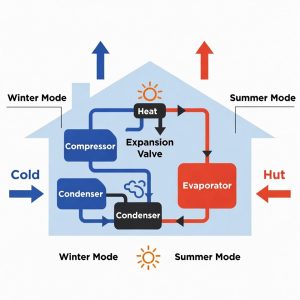
Heat pumps move heat instead of generating it. In winter, they extract heat from the outside air and transfer it indoors, even when temperatures are low. During summer, the process reverses, removing indoor heat and releasing it outside. This cycle relies on refrigerants that change from liquid to gas to absorb and release energy efficiently. The result is a system that heats and cools without burning fuel, saving energy and reducing emissions.
2. Principles of Airflow and Duct Design
Airflow in a building is more than just moving air. Ducts are designed to minimize resistance and turbulence so that air reaches every room evenly. Proper ventilation rates prevent stagnant zones, improve indoor air quality, and maintain consistent temperatures. Engineers use fluid dynamics to calculate optimal duct diameter, bend angles, and fan speeds to reduce energy losses.
3. Humidity Control and Comfort
Humidity affects both comfort and health. High indoor humidity can make rooms feel warmer and increase mold risk, while low humidity can dry out skin and respiratory passages. HVAC systems often include dehumidifiers or humidifiers to maintain ideal levels. Controlling moisture is not just about comfort; it also prevents microbial growth and protects furniture, electronics, and building materials.
4. Energy Efficiency Ratings Explained
Energy efficiency ratios measure system performance. SEER, AFUE, and HSPF are standards used to compare units. SEER measures seasonal cooling efficiency, AFUE measures fuel-based heating, and HSPF evaluates heat pump performance. Higher ratings indicate more energy saved per unit of output. Understanding these metrics helps homeowners make informed decisions when upgrading or maintaining systems.
5. The Role of Insulation and the Building Envelope
A well-insulated home reduces HVAC workload. Insulation slows heat transfer through walls, ceilings, and floors, keeping indoor temperatures stable. Windows, doors, and air sealing are equally important to minimize drafts. When insulation and sealing are optimized, heating and cooling systems run less often, reducing energy use and wear on equipment.
6. Heat Transfer Principles in Action
Heat always flows from warmer to cooler areas. Radiators, floor heating, and cooling coils rely on conduction, convection, and radiation to distribute energy efficiently. Materials with high thermal conductivity, like metals, transfer heat quickly, while slow-conducting materials help retain warmth. Engineers apply these principles to maximize comfort and reduce energy waste. You can read more about how radiators use heat transfer to keep spaces warm in this guide: How Heat Transfer Keeps Us Warm.
7. Why Regular Maintenance Matters
Even the most advanced HVAC systems degrade without care. Clogged filters, dirty coils, and blocked ducts reduce efficiency and may lead to mechanical failure. Routine maintenance preserves system performance, ensures safe operation, and extends equipment life. Scheduling periodic inspections with professionals like those specializing in Frederick MD HVAC repair keeps systems running smoothly throughout the year.
8. Advanced Control and Smart Technology
Smart thermostats and sensors optimize energy use. By monitoring occupancy, outdoor conditions, and indoor air quality, these systems adjust temperature, humidity, and airflow automatically. Algorithms use historical data to predict heating or cooling needs, reducing energy consumption without sacrificing comfort. Integrating smart tech with proper HVAC design ensures maximum efficiency and convenience.
Understanding these eight scientific principles makes a real difference in comfort, safety, and energy efficiency. From heat transfer and fluid dynamics to smart technology and regular maintenance, each factor plays a role in an effective system. Homeowners who recognize the physics behind HVAC operations, and rely on expert support when needed, such as Frederick MD HVAC repair, can enjoy consistent performance and lower energy bills year-round.

 Trustworthy scientific research is harder to find than ever. The internet is packed with information, but not all of it is credible. Curated platforms have become a lifeline for students, scientists, and educators seeking peer-reviewed journals, academic studies, and breakthrough discoveries from trusted sources. These platforms act like expert guides, cutting through the clutter to deliver high-quality content. They save time and ensure users access verified knowledge. So, what makes these directories so essential, and how do they function? Let’s dive into their role in simplifying the search for truth.
 Vinyl Fences: Lightweight Yet Resilient











 Depending on the design of the building, the local climate, and the purpose of the building, natural ventilation might be an efficient way to keep the room at a comfortable temperature. It also reduces energy consumption and maintenance.

 Science, which makes an important influence on knowledge production, is put to new challenges. In any case, digitalization is altering the way in which information is produced, organized and, primarily, received. In a thought through democracy, it is significant that discourses are learnt. And decisions are made on the best possible knowledge base. In this way, science contributes to the functioning of democracies. It also drives innovation and helps countries to be competitive in the best sliding compound miter saw global economy.



 In addition, they kill good bugs and insects, and they destroy biodiversity in ways that affect ecosystems across the farm. Organic pest management is a holistic approach. This has to be acknowledged by every farmer across the globe. Organic farmers implement a lot of strategies, including those that have been described above. This way, they help to reduce the use and impact of chemical pesticides and promote an agricultural system that works in harmony with nature. The result is lower costs, stronger plants, healthier

 In a deliberative democracy, it is important that discourses are informed and decisions are made based on the best possible knowledge. In this way, science drives innovation, contributes to the functioning of democracies, and helps countries to be competitive in the global economy.